Page Count: 216
Average Rating: 4.61
Series: Standalone
Powerful book. I want everyone to read this.
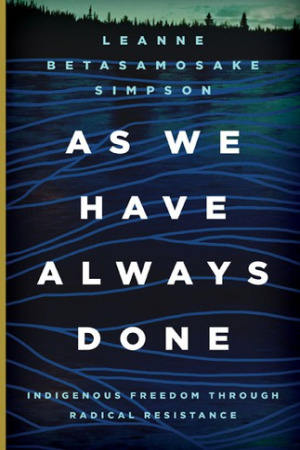
The approach to the book is centered around indigenous learning - she provides a first person account that provides a history and source for where she encountered the ideas in the book, and recognizes that her thoughts will vary from others. In this way, the book is easy to read - much more like a conversation than a formal western academic work. A lot of the concepts were familiar, but some were new to me. She talks about allowing ideas to change, and about our indigenous history of learning from others, and the value of individuality and agency, and the focus on relationships. The book is repetitive in a way that every time you revisit a concept or a story, you have a different frame to look at it through.
There's discussion of indigenous history with the Canadian state, the dispossession of indigenous minds/bodies/lands, decolonization, anticapitalism, indigenous queer normatively, the focus on working with co-resistors, refusal to participate in the system, and what an indigenous embodied future would look like. The book is focused on indigenous values, and isn't catered to be more palatable to whiteness. As she points out, if you don’t center whiteness, the real white allies show up in solidarity anyway.
✓ Read📚 Owned